



Home

In the Name of Allâh, the Most Beneficent, the Most Merciful
Featured Projects:
 |
|||||||||||||

|
Fi Dhilal Al Qur'an - Sayyid Qutb (18 Volumes)
In The Shade Of The Qur'an has been universally recognized as an outstanding contribution to Islamic thought and scholarship, to which students and scholars, as well as contemporary Islamic revivalist movements all over the world, owe a great deal. Now that it is available in English, it will continue to enlighten and inspire millions more. It will take its rightful place as an indispensable work of reference for a proper understanding of contemporary Islamic thinking. |

|
Ar-Raheeq Al-Makhtum (The Sealed Nectar)
By Safi-ur-Rahman al-Mubarkpuri. The heart of every Muslim is filled with the love the last Prophet Muhammad (SAWS) and the love of the Messenger of Allah is an asset for any Muslim. This book a biography goes into the details of the lineage of the Prophet (SAWS) his message, his jihad and his social interaction. |

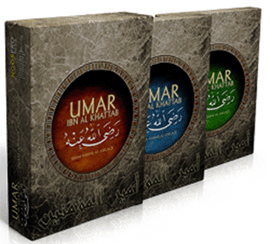
Umar ibn al-Khattab | DVD
This nine-disks DVD PACK features, Shaykh Anwar effortlessly transports the viewer back to a unique place in Islamic history. This epic journey begins with Umars (RA) early life and conversion to Islam, to his close relationship with rasoolullah (SAW), to living through Abu Bakrs Khalifah, to eventually succeeding him as Khalifah and concluding with his brutal assassination. This series is over 20 hrs long and features UNCUT footage and also Q&A which was not included in the audio release. |
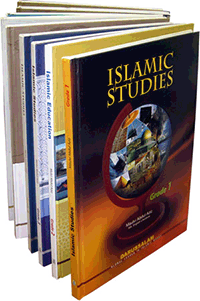
Islamic Education Series Grades 1-12
This series covers all areas of Islamic studies: tafseer, hadeeth, tawheed, fiqh, seerah, and general etiquette relating to different areas and situations. Given the importance of authentic Islamic knowledge, every effort has been made to ensure that the material presented in the series is authentic. Also, given the importance of Arabic Islamic terms, most of the terms are presented in their original Arabic script, along with the transliteration and the translation of their meanings. This also applies to supplications which have to be memorized in their Arabic version. The aim here is to help the reader read the original text and understand its meaning. Each lesson is followed by exercises covering questions about the lesson. |
|
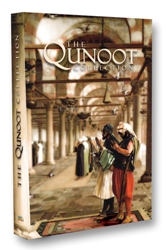
The Qunoot Collection
Dua is one of the strongest weapons of the Believer. This tear-jerking audio set is a collection of Qanoot Dua s made by various Imams from around the world. The Believers, Men and Women, are Supporters and Protectors of one another. They command Al-Ma ruf and forbid Al-Munkar, they perform Salat and give the Zakat, and Obey Allah and His Messenger. Allah will have his Mercy on them. Surely Allah is All-Mighty, All-Wise. (At-Taubah: 71) The Qanoot is recited at times of hardship, difficulties and when the Ummah has been affected by calamities. Usually the Imaam will recite it after the ruku and it is Sunnah for the followers to follow By stretching out their hands in front of their chest (as in du'a) praying that Allah (SWT) alleviate the calamities from the Muslims. The current Crusade against the Muslims is evidently clear from the atrocities committed against them in Iraq, Palestine, Kashmir and Chechnya. The Qunoot Collection CD 1
The Qunoot Collection CD 2The Qunoot Collection CD 3
The Qunoot Collection CD 4
Qunoot e Naazilah - Bonus |
|
The Story Of The Bull By Imam Anwar Al-Awlaki. Umar ibn Khattab (may Allah be pleased with him) asked Ubbay ibn Ka ab (may Allah be pleased with him), What is the meaning of Taqwa? Ubbay ibn Ka ab said, O Amir ul Mu minin, have you walked on a field that had a lot of thorny plants? Umar said, Yes Ubbay ibn Ka ab said, So what did you do? Umar replied, I lifted up my clothes and I was very careful, Ubbay ibn Ka ab said, That is Taqwa. |
|
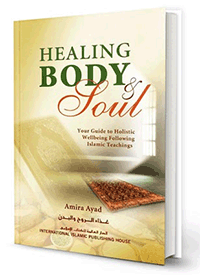
Healing Body & Soul
Diet & nutrition Stress management Detoxification Neurolinguistic programming Exercise & physical therapy Lifestyle changes The power of prayer Like other guides to good health, Healing Body & Soul: Your Guide to Holistic Wellbeing Following Islamic Teachings advocates abandoning an unhealthy diet and altering a sedentary lifestyle, but this book goes beyond the mere physical aspects of health. Dr. Amira Ayad is a practitioner and researcher with a Master's in Pharmaceutics and a Doctorate in Natural Health. |
Lion of the Desert (Umar al Mukhtar)
We go back in history to 1862 where a young boy of a poor household was born in a town controlled by the Uthmany Khilafa. This young man was brought under the care and tutelage of one of the Shuyookh in his home town when he was at the ripe age of 16 after the death of his father. He eventually developed a lifestyle of not sleeping more than 3 hours every night in order to get up to pray to Allah at the last third of the night and recite Qur'an until fajr. He memorized the Qur'an (as all knowledgeable people begin their lives) eventually, and was known to have finished his revisions in its entirety every seven days, regardless of the sufferings he encountered in his life. |
|
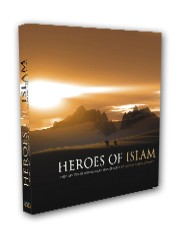
Heroes Of Islam
The life of the Muslim Ummah is solely dependent on the ink of it's scholars and the blood of it's Martyrs." - Shaykh Abdullah Azzam (May the Mercy of Allah be with him) Indeed history is written in the colours, black - the ink of its scholars, red - the blood of the martyrs. Maktabah Sound Studio is proud to introduce "Heroes of Islam" a series of lectures exploring the lives of some of the greatest men in the history of Islam these being:-
|
|
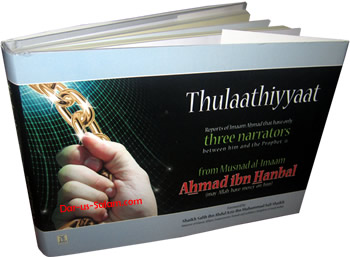
Thulaathiyyaat from Musnad Imam Ahamd bin Hanbal
Amongst the countless blessings which Almighty Allah has bestowed upon the Muslims is that He has preserved their religion for them and provided the appropriate means for Islam to be safeguarded and preserved, in that He has raised erudite scholars through whom the Sunnah of the Noble Prophet, Muhammad ibn Abdullaah (S), the seal of the prophets, has been preserved. Thus the Book of Allah and the Sunnah of the Prophet (S) provide evidence against mankind. One of the scholars through whom Allah preserved the Sunnah was Imaam Ahmad ibn Hanbal (Rahimahullah), and one of the books that he wrote to preserve the Sunnah is al-Musnad, which is one of the major collections of the noble Sunnah. |
Dua Qunoot - Mishari Rashid al-Afasy
|
|
Gaza Through Our Eyes
Shaykh Zahir details the epic Viva Palestina journey from Britain to Gaza. He describes the highs, lows, ebbs and flows of the journey, the immense love and emotion displayed by the general public and the obstacles created by some of the world s most notorious police states. The lecture ends with an emotional description of the suffering of the Gazans, witnessed first hand by the members of the convoy. |

Description of Paradise by Imaam Ibn al-Qayyim Ibn al-Qayyim said, in regards to the description of the Paradise and the delights that it contains:
"And if you ask about its ground and its soil, then it is of musk and saffron.
And if you ask about its roof, then it is the Throne of the Most Merciful.
And if you ask about its rocks, then they are pearls and jewels.
And if you ask about its buildings, then they are made of bricks of gold and silver.
And if you ask about its trees, then it does not contain a single tree except that its trunk is made of gold and silver.
And if you ask about its fruits, then they are softer than butter and sweeter than honey.
|
A party in Paradise, A party in Hellfire
The Companions of our Prophet Muhammed (SAW) used to gather to remember death so that they would benefit their souls by increasing in fear of Allaah and strive to gain His pleasure. If this was the case of the Sahaabah and they were the best of generations, the most pious and God-fearing of this ummah, then what about us? Surely, it means that we need to engage in the remembrance of Allaah(SWT) even more. After all, we are in far more need of this act of worship than they were....
|







