[A+] [A-]

Miscellaneous

In the Name of Allâh, the Most Beneficent, the Most Merciful


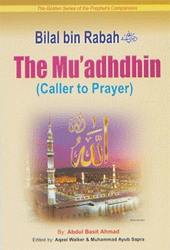
The Story of Bilal Ibn Rabah (For Children)


By Bilal Abdul-Kareem. The epic story of the first muadhdhan of the Muslims, his long and testing path to Islam, his unwavering faith in Allah, and his undying love for the Prophet Muhammad, blessings and peace be on him and on his family and Companions.


Courtesy of Aim Films . Tv


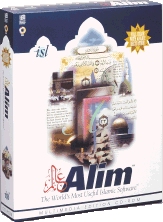
The Alim 6.0


The Alim is a unique and exciting educational software product that makes learning about Islam fun and interesting for the whole family! Experience the wonder of the Quran and Hadith without spending hours poring through thousands of pages in dozens of books. Quickly go to any book, any subject, any page in seconds and with only a few mouse clicks. Search for any word, phrase, person, hadith narrator, subject, or idea and acquire Islamic knowledge easily. The Alim is an indispensable tool that no Muslim family should be without.

Instructions to download: This program is a nrg file so once downloaded you will need to burn it on cd as an image using Nero and then install it on your computer with the cd.


Unity

If the enemy captures a single Muslim, it becomes wajib (obligatory) on every one who has the ability, to rush to their rescue (even without seeking anyone’s permission). It is apparent that it is compulsory on everyone, similar to the situation where the enemy invades our land. Moreover, saving our brothers is of a higher priority, as the sanctity of a Muslim is greater (than the sanctity of a State). - Ibn Hajar Al-Haithami Rahimahullah


Let us learn a lesson from the buffaloes.


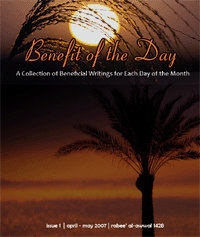
Benefit of the Day Magazine - Issue 1


And ‘Abdullah bin al-Mubarak recorded in az-Zuhd [p. 51] that al-Hassan al-Basri said, "I saw those people [the salaf] and how they were more careful about their time than about their Dirhams and Dinars [i.e. their money].”

So we Muslims live in an age where our time is discarded thoughtlessly, when time is, in fact, the currency with which we buy safety and bliss in the Hereafter. We, the sisters of Dar at-Tibyan, in the effort to benefit from our time, increase our good deeds, and recommend one another to the Truth and to patience, present our brothers and sisters in Islam with a book of short, beneficial lessons and reminders – one for each day in the month - which we hope will add to your knowledge, help you use some of your free time beneficially, and assist you in your accumulation of good deeds. We ask Allah to accept this effort from us, to bless it, and to allow us to continue in what is pleasing to Him, Amin.


Benefit of the Day Magazine - Issue 2


From the contents: The World and all it contains, The conditions of 'laa ilaaha illaa Allah', The character of the believer, Death, Taste the sweetness of Emaan, Repentence...


Benefit of the Day Magazine - Issue 3


From the contents: Love for Allah, Backbiting, Sincerity, Weeping from the fear of Allah, Visiting the graves, The greatest woman of all time, The best among believers, O Christ worshippers, Beware of the vulture culture...


Benefit of the Day Magazine - Issue 4


From the contents: The Duha Prayer, Why do women need careers and professions, The manner of giving greatings of peace, Kindess to parents, Signs of Allah's existence ...


Benefit of the Day Magazine - Issue 5


From the contents: Malcolm X: This is what I believe in, The Muslim women's character, The Virtues of Ramadan, The types of fasting, Remembrance of Allah, What is love, Ramadan checklist...


Taken From Benefit Of The Day


Light-Hearted Lecture Moments


The Field Negro

by Malcolm X


Audio from The Message to the Grassroots speech, November 10, 1963. (Though this talk was given while brother Malcolm was with the racist group Noi, we can still take lessons from it if we take the term 'field negro' to mean = a real Muslim, 'house negro' to mean = fake Muslim, 'master' to mean = puppet leaders and 'white man' to mean = non Muslim.)


The Ruling on Yang-Ping

by Jamal al-Din Zarabozo and Ali al-Timimi


From a JIMAS Question and Answer session in 1997.


Reminders


Only a portion?!
Allaah `azza wa jall, says in Soorah al-Nisaa:

“Whosoever intercedes for a good cause will have a ‘naseeb’ thereof, and whosoever intercedes for an evil cause will have a ‘kifl’ of it. And Allah is Ever All-Able to do everything.” [al-Nisaa: 85]

Let’s have a look at these 2 separate words (in bold)

نصيبٌ

كِفْلٌ

They both mean the same thing – they both mean ‘portion’ or ‘a part of something’. Allaah `azza wa jall is informing us that the one who intercedes for a good or a bad cause will receive a portion of that deed written down for him. But why the 2 different words if they both mean the same thing?Well, do they mean exactly the same thing? Let’s take a look.

The word ‘kifl’ is very ‘muhaddad’ – restricted and bounded. In language it means: a portion that is equal in all spheres, as they say النصيب المساوي –an equal portion, no shortcoming therein nor any ‘ziyaada’ – increase. Allaah `azza wa jall used this word here to inform us that the one who does intercede for an evil cause will only receive an equal portion thereof – there is no injustice. As He says in Soorah al-Ghaafir:

“Whosoever does an evil deed, will not be requited except the like thereof…” [al-Ghaafir: 40]


As for the word ‘naseeb’ then again it also means ‘portion’ but amazingly it has an added meaning of ‘ziyaada’ (increase) and that the portion can be multiplied. It is for this reason that when speaking of the reward/portion of the one who intercedes for a good cause, Allaah subhaanahu wa ta’aala uses the word ‘naseeb’.

As is known, out the mercy, favour and generosity of Allaah, the reward for good deeds are multiplied by ten times and more (up to 700 times) whereas the evil deed is only written down once and this is highlighted ever so subtly and yet so profoundly in the simple ayah above: “Whosoever intercedes for a good cause will have a ‘naseeb’ thereof, and whosoever intercedes for an evil cause will have a ‘kifl’ of it. And Allah is Ever All-Able to do everything.” [al-Nisaa: 85]

It is for this reason that the above ayah in Soorah al-Ghaafir ends with…

“Whosoever does an evil deed, will not be requited except the like thereof, and whosoever does a righteous deed, whether male or female and is a true believer, such will enter Paradise, where they will be provided therein without limit.” [al-Ghaafir: 40]


From the Greatest of Sins: Being Bored of Allah's Blessings


Ibn al-Qayyim said:

"From the greatest of sins which are hidden - and widely practiced - is that the servant is enjoying a blessing that Allah has blessed him with and chosen for him, then that servant becomes bored of it and seeks to exchange it for what he thinks - due to his ignorance - is better for him than it, and His Lord continues to be merciful to him and does not prevent him from this blessing, and He excuses him due to his ignorance and this bad choice that he has chosen for himself. When he reaches the limit in scorning this blessing and his boredom with it overcomes him, Allah removes this blessing from him. So, if he is given what he sought in exchange for that blessing, and he sees the immense difference between what he was previously enjoying and and what he has now been given instead of it, his anxiety and regret increase and he requests a return to what he previously had. So, if Allah desires good and guidance for His servant, He allows him to bear witness that what he had was a blessing from the blessings of Allah upon him, and He causes him to become pleased with that blessing and to give thanks to Allah for it. If his soul then whispers to him to again seek to exchange that blessing for something else, he makes istikharah to His Lord, the istikharah of the one who is ignorant of what is in his best interests and unable to attain them. He turns his affairs to Allah, requesting of Him to help him make the best decision.

And there is nothing more harmful to the servant than to become bored of the blessings of Allah, because he does not see it as a blessing, and he does not thank Allah for it, and does not become happy because of it. Rather, he belittles it, complains about it and considers it to be a disaster - all this while it can well be from the greatest of Allah's blessings upon him.

Most people have a feeling of enmity towards Allah's blessings upon them, and they do not percieve that this opening that Allah has given them is actually a blessing, and they exert the utmost effort in repelling it and pushing it away out of ignorance and oppression. So, how many are those whom Allah's blessings comes to one of them, and they rise to repel and fight against it? And how many are those whom the blessing comes to one of them and he strives to push it away and brush it to the side out of ignorance and oppression?

Allah - the Exalted - says: {"And this is because Allah would not change a blessing that He has blessed a people with unless they change what is within themselves."} [al-Anfal; 53]

The one who is devoid of logic loses his chance * Until the affair passes him by. Then, he blames predestination."

['al-Fawa'id'; p. 248]


An extraordinary incident of brotherhood....

On the day of the battle of Yarmuk, I went out to find my uncle on the battlefield, and I had with me a container of water. I said to myself that he had some life left in him, then I would quench his thirst with the water and wash the dirt from his face. Suddenly, I came across him, and he was going in and out of conciousness. I asked him: "Do you want me to give you some water?" so, he nodded his head. Suddenly, he heard another wounded man in the distance calling out in pain. So, my uncle motioned for me to go tend to him. I went to him and saw that he was Hisham, the brother of 'Amr bin al-'As. I came to him and asked if he wanted me to give him some water, and suddenly, we heard the sound of another man calling out in the distance in pain. So, he motioned for me to go tend to him. I came to him to find that he had already died. So, I went back to tend to Hisham only to find that he had died as well. Then, I went back to tend to my uncle only to find that he, too, had died."

So none of them, in their love for others had died without quenching their thirst. Such a proof of sacrifice and brotherhood is unparalleled in human history.

This incident was reported by 'Abdullah bin al-Mubarak in 'az-Zuhd' (1/185), Ibn Hajar in 'al-Isabah' (7/34), and also in Ibn al-Mubarak's 'al-Jihad' (1/100) by way of Abu al-Jahm bin Hudhayfah al-'Adawi, by way of 'Umar bin Sa'id. The muhaqqiq of 'al-Jihad' mentions that the chain's narrators are all trustworthy, and Allah Knows best.


Love of Allah Found in "Al-Walaa wal-Baraa" of M S al-Qahtani

The love of the Beloved
must be unconditionally returned.


If you claim love
yet oppose the Beloved,
then your love is but a pretence.
You love the enemies of your Beloved
and still seek love in return.


You fight the beloved of your Beloved.
Is this Love or the following of shaytaan?
True devotion is nothing
but total submission
of body and soul
to One Love.


We have seen humans claim to submit,
yet their loyalties are many.


They put their trust here, and their hope there,
and their love is without consequence.


I am not crying because ....

A man reached 70 years of age and he faced a disease; he could not urinate. The doctors informed him that he was in need of an operation to cure this disease. He agreed to have the operation done as the problem was giving him much pain for days. When the operation was completed, his doctor gave him the bill which covered all the costs. The old man looked at the bill and started to cry. Upon seeing this the doctor told him that if the cost was too high then they could make some other arrangements. The old man said "I am not crying because of the money but I am crying because Allah let me urinate for 70 years and He never sent me a bill."


...and if you try to count the blessings of Allah, never will you be able to count them... Surah Ibrahim

Allah states that the servants are never able to count His blessings, let alone thank Him duly for them. In Sahih Al-Bukhari it is recorded that the Messenger of Allah( Peace and blessings be upon him) used to supplicate;


«اللَّهُمَّ لَكَ الْحَمْدُ غَيْرَ مَكْفِيَ وَلَا مُوَدَّعٍ وَلَا مُسْتَغْنًى عَنْهُ رَبَّنَا»

O Allah ! All praise is due to You, without being able to sufficiently thank You, nor ever wish to be cutoff from You, nor ever feeling rich from relying on You; our Lord!

It was reported that Prophet Dawud peace be upon him, used to say in his supplication, "O Lord! How can I ever duly thank You, when my thanking You is also a favor from You to me''
Allah the Exalted answered him, "Now, you have thanked Me sufficiently, O Dawud,'' meaning, `when you admitted that you will never be able to duly thank Me.'


Why Did Ibn Hazm Begin Studying Islam?

In 'Siyar A'lam an-Nubala' (13/547), adh-Dhahabi narrated that Abu Muhammad 'Abdullah bin Muhammad - the father of the famous Spanish scholar Ibn al-'Arabi - said:

"Ibn Hazm related to me the reason he began studying Fiqh.

He was once at a funeral prayer. So, he entered the mosque, and sat down without praying. A man then said to him: "Get up and pray tahiyyat al-masjid," and he was 26 at the time.

Ibn Hazm himself said: "So, I got up and prayed. When we returned from the janazah, I entered the mosque, and prayed before sitting down. It was then said to me: "Sit down, sit down. This is not a time to pray," as it was after the time of 'Asr. So, I walked away while I was very sad. I went to my teacher that had nurtured me, and said: "Direct me to the house of the scholar Abu 'Abdillah bin Dahhun." So, I went to him, told him of what had happened, and he directed me to 'al-Muwatta'' of Malik. So, I began studying it at his hands, and continued studying it with him and others for a period of three years. After this, I began debating with the people.""

After mentioning this story, adh-Dhahabi then goes on to list almost 80 books that Ibn Hazm had written during his lifetime, the largest being 'al-Isal ila Fahm Kitab al-Khisal,' which is a longer version of the more well-known 'al-Muhalla,' and is over 15,000 pages long!

Considering that Ibn Hazm began studying Islam at 26, and died at the age of 71, this meant that he wrote an average of two books per year - and this is just in terms of the books whose titles we know of, as he had written over 300 other books that were burned up by the ruler of the time, al-Mu'tadid.

I just found it interesting that such a tremendously influencial scholar, with so many awesome and brilliant works, was driven to study the Din because of this single incident.

Translated by Abu Sabaayaa


Ten different phrases that are short, easy, and light, but will give you what no eye has seen, no hear has heard, and what no mind has imagined.

Enjoy (and implement):


1 -
"Whoever says: 'Glorified is Allah, the Most Great, and praised is He' [Subhan Allah al-'Adhim wa bi-Hamdih] will have a date palm planted for him in Paradise." ['Sahih al-Jami'' #5531]

2 - "Whoever is stricken with sadness, grief, sickness or hardship and says: 'Allah is my Lord, without any partners' [Allahu Rabbi, la sharika lah], then it will be removed from him." ['Sahih al-Jami'' #6040]

3 - "Whoever ate something, then said: ‘Praise be to Allah who has fed me this food and provided it for me, without any strength or power on my part’ [al-Hamdu lillah aladhi at'amani hadha wa Razaqnih bi ghayr hawlin minni wa la quwwa] is forgiven his past and future sins. And whoever wears a garment and says: ‘Praise be to Allah who has clothed me with this garment and provided it for me without any strength or power on my part' [al-Hamdu lillah aladhi kasani hadha at-thawb wa Razaqnih bi ghayr hawlin minni wa la quwwa] is forgiven his past and future sins.” ['Sahih al-Jami'' #6086]

4 - "Whoever enters the marketplace and says: 'There is none worthy of worship except Allah who has no partners, for Him is the Dominion, and for Him is all Praise, He brings life and He causes death, and He is Alive and does not die, in His Hand is all good, and He is able to do all things,' [La ilaha ill-Allah, Wahdahu la sharika lahu, lahul-Mulk, wa lahul-Hamd, yuhyiyy wa yumit, wa Huwa Hayyun la yamut, bi Yadihil-Khayr wa Huwa 'ala kulli shay'in Qadir] then Allah will write one million good deeds for him, and will wipe away one million of his bad deeds, and will raise him one million levels and will build a home for him in Paradise." ['Sahih al-Jami'' #6231]

5 - "Whoever controls his anger when he is able to act upon it, then Allah will call him to come in front of all of the Creation so that he would let him choose from the Hur al-'Ayn and marry from them whomever he pleases." ['Sahih al-Jami'' #6518]

6 - "Whoever asks Allah for Paradise three times [Allahumma inni as'aluk al-Jannah], then Paradise will say: "O Allah! Enter him into Paradise!" And whoever seeks protection with Allah from the Fire three times [Allahumma najjini min an-Nar], the Fire will say: "O Allah! Protect him from the Fire!"" [Reported by at-Tirmidhi, and it is authentic]

7 - "Whoever seeks forgiveness for the believing men and the believing women, Allah writes for him - for every believing man and woman - a good deed." [Reported by at-Tirmidhi, Ibn Majah, and Ahmad, and it is authentic]

8 - ‘Abdullah bin Mas’ud said: "Whoever reads 'al-Mulk' (chapter 67 of the Qur'an) every night, Allah will protect him from the torment of the grave. At the time of the Messenger of Allah (peace be upon him), we used to call it al-mani’ah (that which protects). In the Book of Allah, it is a chapter which - whoever recites it every night - has done very well." ['Sahih at-Targhib wat-Tarhib' #1475]

9 - “Whoever asks Allah sincerely for martyrdom [Allahumma inni as'aluk ash-shahadah], Allah will cause him to reach the status of the martyrs even if he dies in his bed.” ['Sahih al-Bukhari' #1909]

10 - "No one witnesses that there is none worthy of worship but Allah and that I am Allah's Messenger - truthfully, from his heart - except that Allah makes the Fire of Hell forbidden to touch him." [Reported by Muslim, Ahmad, and al-Bayhaqi]

Translated by Abu Sabaayaa


Ibn al-Qayyim: The Characteristics of the Seeker of Happiness


Ibn al-Qayyim said:

"...The seeker of Allah and the Hereafter - rather, the one who seeks to obtain all knowledge, productiveness, and leadership, such that he is a leader who is taken as an example in all of this - should be brave, bold, in control of his whims, and not under the control of his imagination.

He should be abstinent from everything except that which he is after, passionate about what he has turned his face towards, knowing the path to it, as well as the paths which lead away from it.

He should be bold in his aspiration, firm in his resolve, and not swayed from his goal by the blame of the blamers or the discouragement of the discouragers.

He should generally be tranquil, constantly in thought, and not be moved by the sweetness of a compliment or the pain of criticism.

He should be forthcoming in providing himself with what he needs to help him obtain his goal, and should not be incited by those who oppose him.

His slogan should be patience, and his rest should be his fatigue, and he should love to have the best manners.

He should make the best of his time, not mixing with the people except in a most cautious state, just like a bird that quickly comes down to snatch a morsel from between two people.

He should stand over himself, encouraging himself by way of hope and fear, and should seek to be outstanding amongst his group..."

['al-Fawa'id'; p. 265]

Translated by Abu Sabaayaa

Ibn Taymiyyah wrote the entire book 'as-Sarim al-Maslul' from memory!


In the publisher's introduction to 'as-Sarim al-Maslul 'ala Shatim ar-Rasul,' further proof of Ibn Taymiyyah's genius, where he quotes al-Bazzar as saying:

"And from the strangest of things in regards to this is that during his first trial in Egypt, he was taken and jailed, such that he was prevented from having access to his books. During this time, he authored many books - small and large - and mentioned in them what was of ahadith, narrations, statements of the Companions, names of the scholars of Hadith, authors and their works - and he attributed each of these to their proper sources, specifically by name. He also mentioned the names of the books in which each narration was found, as well as where in the books to find them. All of this was purely from his memory, as at the time, he did not have a single book with him to use as a reference. These books were then published and looked over, and - praise be to Allah - not a single mistake was found in any of them, nor did anything need to be changed in them.

And from these books is 'as-Sarim al-Maslul 'ala Shatim ar-Rasul,' and this is from the virtue that Allah - the Exalted - reserved especially for him."

And to give you an idea of the vastness of the book, the publisher's introduction goes on to mention that it contains over 250 ahadith, 100 athar, the mention of over 600 famous personalities throughout the history of Ahl as-Sunnah wal-Jama'ah, collected information from over 40 references (and these are just the ones he mentioned by name) - all from memory, and this entire book was written in response to one single incident in which Ibn Taymiyyah heard a Christian insulting the Prophet!

Translated by Abu Sabaayaa

Ibn Hazm al-Andalusi: "My aspiration in this world..."


مُنَايَ مِنَ الدُّنْيا عُلومٌ أَبُثُّهَا * وأنْشُرُهَا فِي كُلِّ بَادٍ وحَاضِرِ


دُعَاءٌ إلَى القُرْءانِ والسُّنَنِ التِي * تَنَاسَى رِجَالٌ ذِكْرَهَا في المَحَاضِرِ

وأَلْزَمُ أَطْرافَ الثُّغُورِ مُجَاهِداً * إذَا هَيْعَةٌ ثَارَتْ فَأَوَّلُ نَافِرِ

لأَلْقَى حِمَامِي مُقْبِلاً غَيرَ مُدْبِرٍ * بِسُمْرِ العَوالِي والرِّقَاقِ البَواتِرِ

كِفَاحاً مَعَ الكُفَّارِ فِي حَوْمَةِ الوَغَى * وأَكْرَمُ مَوْتٍ لِلْفَتَى قَتْلُ كَافِرِ

فَيَا رَبِّ لا تَجْعَلْ حِمَامِي بِغِيرِهَا * ولا تَجْعَلَنِّي مِنْ قَطِينِ المقَابِر


My aspiration in this world is to put forth knowledge,
And to spread it openly in every town and village;

Being one who is calling to the Qur'an and sunan,
That, in their gatherings, the men have forgotten;

And, as a Mujahid, on the farthest frontlines to stay,
If I am called forth, being the first to make my way;

ًWith the clanking of weapons in the darkness, frequented by silence,
Clashing with the disbelievers, encircled by the violence;

Not turning back, facing my demise with my chest,
To be killed by a disbeliever is the youth's death noblest;

So, O my Lord, allow me not to die in any other way,
And use me not as a stuffing for the graves.


[Ibn Hazm's 'at-Talkhis li Wujuh at-Takhlis'; p. 57]


Nasheeds


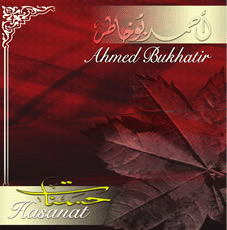
Hasanat


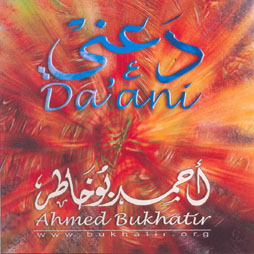
Ahmed Bukhatir was born in Sharjah in the UAE, where he still lives. He graduated in 1999 from Al-Ain University achieving a bachelor degree in Management Information Systems.


Ahmad Bukhatir started singing in 1989 and his albums reached a wide fan base within a short period of time. His first solo album was released in November 2001 and since then he has built on his success through various concerts and festivals.


Ahmed Bukhatir is hugely popular in the Gulf area and the Arab world. Ahmed seeks to spread Islamic thoughts to the entire world through his performance of nasheeds, producing a unique blend of words and melody.


Fartaqi


Samtan


Da'ani


Funnies


Frank Caliendo On Bush
Bush Vs Bush
Hugo Chavez On Bush


print this page bookmark this page
preloaded image preloaded image preloaded image preloaded image preloaded image